Name: Harjant Gill
Pronouns: he, him, his
Interview Date: September 27, 2023
Interviewer: prabhdeep singh kehal
Length of interview: 1:24:58
How would you describe your current sexual identity? Gay
How would you describe your current gender identity? Queer Male
Interview with Harjant Gill
00:00:00 SPEAKER_PSK
This is prabhdeep singh kehal. Today is Wednesday, September 27th, 2023. I’m interviewing for the first time Harjant Gill. This interview is taking place remotely from Madison, Wisconsin and Washington, D.C. in the United States. This interview is sponsored by Jakara and is part of the “Storytelling and Settlement through Sikh LGBTQIA+ Oral Histories Project.” Thank you for joining me today and having this conversation. We’re going to start a bit broad with our conversation today. So when you think back to your experiences of growing up, tell me a little bit about what comes to mind. To you, are there common stories, smells, or relationships that come to mind that help you describe growing up?
00:00:59 SPEAKER_HG
That’s a very broad question to begin with. I grew up partially in India and partially in California. You know, I spent the first 14 years of my life in Chandigarh. And then I spent, another— the next 10 years of my life, which I’d argue were also formative years of my life, in California.
And so the stories that come to my mind are those of migration, leaving home behind, exile to a certain degree, the choices people make in terms of how they decide whether to go abroad or not, and also who is left behind. You know, so there’s a story of a family trying to find its identity in a new country, in a new culture. It’s a story of a part of a family who’s left behind and the kind of emptiness and loss that they’re left with, which is my grandparents who didn’t move to the U.S. And also in the midst of all that, me figuring out my own kind of queer identity, you know. And doing that in the midst of trying to locate myself within a new culture and new country, right? So I think those are the stories that I keep coming back to, even in my writing and my films, of that sense of dislocation that one feels. And on both the kind of intimate as well as kind of political and cultural levels.
So I have a twin brother who is straight, so far, you know. He’s heterosexual and he— him and I had a very similar upbringing. So in some ways we kind of had these, these identical lives and we’ve always been very close to each other. We’ve shared all of our life together. We pretty much lived together in the same place for the majority of our lives, and often, you know, in the same house. And so for him, that struggle of trying to find his place in this new culture and new society when we moved to the U.S. — to California, was not— I mean, it was a struggle in itself, you know, and I don’t want to diminish the struggle, that the difficulties that he went through and my elder sister went through, but it was not compounded by this added struggle of trying to figure out your identity, your sexual identity and your gender identity, you know.
So I think somewhere, at least when I was coming of age, which was really in 1990s and the early aughts, that felt like an experience of coming out as queer, as gay, you know. As well as trying to figure out, you know, who I am as a Sikh person, as an Indian living in the United States, as an immigrant, you know. It always felt like a negotiation. It was like, you know, I could be one or the other. I couldn’t quite inhabit both of those identities simultaneously, you know. And it’s only until recently, more recently, much more recently, that I’ve come to be able to do that, you know. But for the big chunk of my life, until I started grad school, it was always this sort of struggle between, you know, whether I wanted to be this kind of this Indian Sikh immigrant or whether I wanted to be this kind of queer person of color, you know, and the two didn’t really gel together.
00:05:18 SPEAKER_PSK
Thank you. One thing that you mentioned across these different moments of your childhood and upbringing was the relationship to place. A lot of movement. I think you used the word migration as part of something that came to mind a lot. I’m wondering, because you’re sharing that it wasn’t until, I think you said, your grad school years that you started moving from this struggle of different identities towards a negotiation of your different identities. I’m wondering, in what ways did you feel that the different places that you were in was part of that experience? Were there certain places that made you feel more at struggle, less at struggle, and things of that nature?
00:06:08 SPEAKER_HG
Yeah, I mean, I think in many ways, when people ask me, you know, what are the kind of, “What’s your, where are you from?” You know, that question of, like, “Where are you from?” Which always implies, “What place do you consider your home?” And whenever confronted with that question, I often respond, you know, “Chandigarh.” Which is the city that I grew up in, which is also where my grandfather lived, my grandparents lived, and, you know, that shaped so much of who I am today. If you know the history of Chandigarh, if you know about Chandigarh as a city, it has this kind of awkward identity as this modernist city, but it’s predominantly Panjabi. It’s predominantly, a big chunk of Sikh population lives there, you know. So it really shaped my identity as an Indian when I was growing up there.
And my, I also grew up in a very not an orthodox, but a fairly religious family where it was very important for my grandfather, for us to keep our Kesh [uncut hair], and it was really important for us to maintain our Sikh identity. I came of age in the 1980s, immediately after Panjab had gone through this incredibly traumatic set of events, you know, and even though I was two years old in 1984 when the, when the incident at the Golden Temple — when the Operation Blue Star took place — I remember the, the sort of, that kind of being very aware of violence as kind of this undercurrent that affected our lives. Even in Chandigarh, you know. Because even though Chandigarh was a little bit removed from the rest of Panjab, and my— my family prior to that, you know, were mostly from rural Panjab, parts of Panjab that were affected by the political violence. So I always came— I did come of age with this very keen awareness of, of having lived in this post-violence Panjab, right? And, and to a large degree, who I am, my cultural and my religious identity was shaped by that. And not just in terms of my faith, but also the way we looked. I remember this constant need for my parents, or my, actually my grandfather to emphasize that the reason why we grow our hair long is because in the past we’ve been persecuted. You know, Sikh men have been persecuted for their hair, you know. And which is why you must keep your hair long, and you must hold on to your faith, because look at, we’ve had this history of, of being, being subjected to violence. And it’s in the, in the face of that violence, we remain steadfast in our faith. And if you would forgo that, or if you would, you know, give that up, then, you know, how, you’re not a, you’re not a good man. Certainly you’re not a— a man in many ways, right?
And, and so, so that place, in some ways, very much defined my culture and my religious identity. And it was an identity that, you know, that was suddenly upended when migration happened, because it’s not like my parents explained to me that, like, you know, “Oh, you’re going to be going to the U.S. You’re going to go through all these emotional changes, you’re going to experience all this kind of cultural loss.” It was like, one day, you know, the visa arrived. And like, the next day, we’re packing our stuff to go. And like, nobody really talks, especially in Panjabi families, we don’t really talk about our emotional lives at that time. And like, the sense of loss that we’re going to experience. Like nobody prepared, you know, the 14 year old me or 15 year old me to deal with the kind of trauma that you would experience. And suddenly you’re thrust into this new world in California. And my, you know, one of the, for me, what was a kind of a formative moment in, in, in leaving Chandigarh, before leaving Chandigarh, was this decision of my father to go and take me and my brother to get our hair cut. And it was a decision that really upset my grandfather. It really hurt my grandfather in a way that it was always, he always reminded me of, until the day he died, you know? Like it was, so, so and it was not a decision that I made, it was my decision that my father made for me, you know.
And then immediately upon arriving in California, you know, there’s never, there was never really this opportunity to contend with this incredible disruption and dislocation that we dealt with. It was like, “Oh, now we’re in this new country. We don’t have any money. We need to start working, you know. We need to pull our money together. You need to act in a mature, responsible way. You need to go and work part time. You need to get good grades, go to college,” you know. And suddenly we’re sort of thrust into this narrative of like, what a “good Indian immigrant” is supposed to be without having talked about, you know, like, okay, what do we do in terms of who are we in terms of our religious identity? What is our cultural identity? And in the midst of all that, I was trying to figure out who I am as a queer person, because, you know, suddenly I was in California, where the language of queerness and being gay was more available to me, right? And I could put a kind of a word to it, it was like, “Okay, this is who I am,” right? But then that felt like an incredible betrayal towards my family and my parents. And so I kind of became— in California, I kind of became a rebellious teenager who sort of forsake my kind of identity— my Sikh identity and my Indian identity. I was like, I was like, “I don’t even give a shit about being Indian. I don’t care about being Sikh,” you know, those are not things. I am this kind of queer person, you know. And I’m going to move to San Francisco and discover what that’s like, or what that entails, right? Because for me, it was like, if I can get to San Francisco, find my queer tribe, find my chosen family.
You know, I remember when I was in high school in San Jose, at that time. Every Pride month, which was in June, the television, PBS, or KQED, I think is the local television at that time, used to show Tales of the City. You know, the adaptation of the Armistead Maupin’s novel. And I would watch it, I recorded it, and I would watch it over and over and over again. And I had this idea, I had this fantasy that if I could get to San Francisco and find like Barbary Lane, that would be the place where I can find my community, or who I am and find where I can live, right?
And I think a big part of— so— a big part of, you know, me figuring out my own identity happened also through kind of the discovery of queer literature, diasporic literature, which my parents didn’t care about. My family doesn’t care about, you know. So suddenly there was a kind of a different, I moved away from this idea of being Sikh and a Panjabi, you know, and to being like more sort of South Asian diasporic person and queer person. But even that was always, there’s always something missing there, right? Like even when you get to San Francisco, you realize very quickly, at least at that time, that there’s no space for people of color, you know, or there wasn’t a space for people of color. Or you exist in this sort of hegemony of like white queerness, you know. And so that was, confronting that was quite difficult. To kind of say, “Oh this is what I was, had kind of forsaken my family for,” you know. And eventually I kind of had to work all through all those things to arrive at like at a place where I’m now much more at peace or comfortable with both of those parts of my identity.
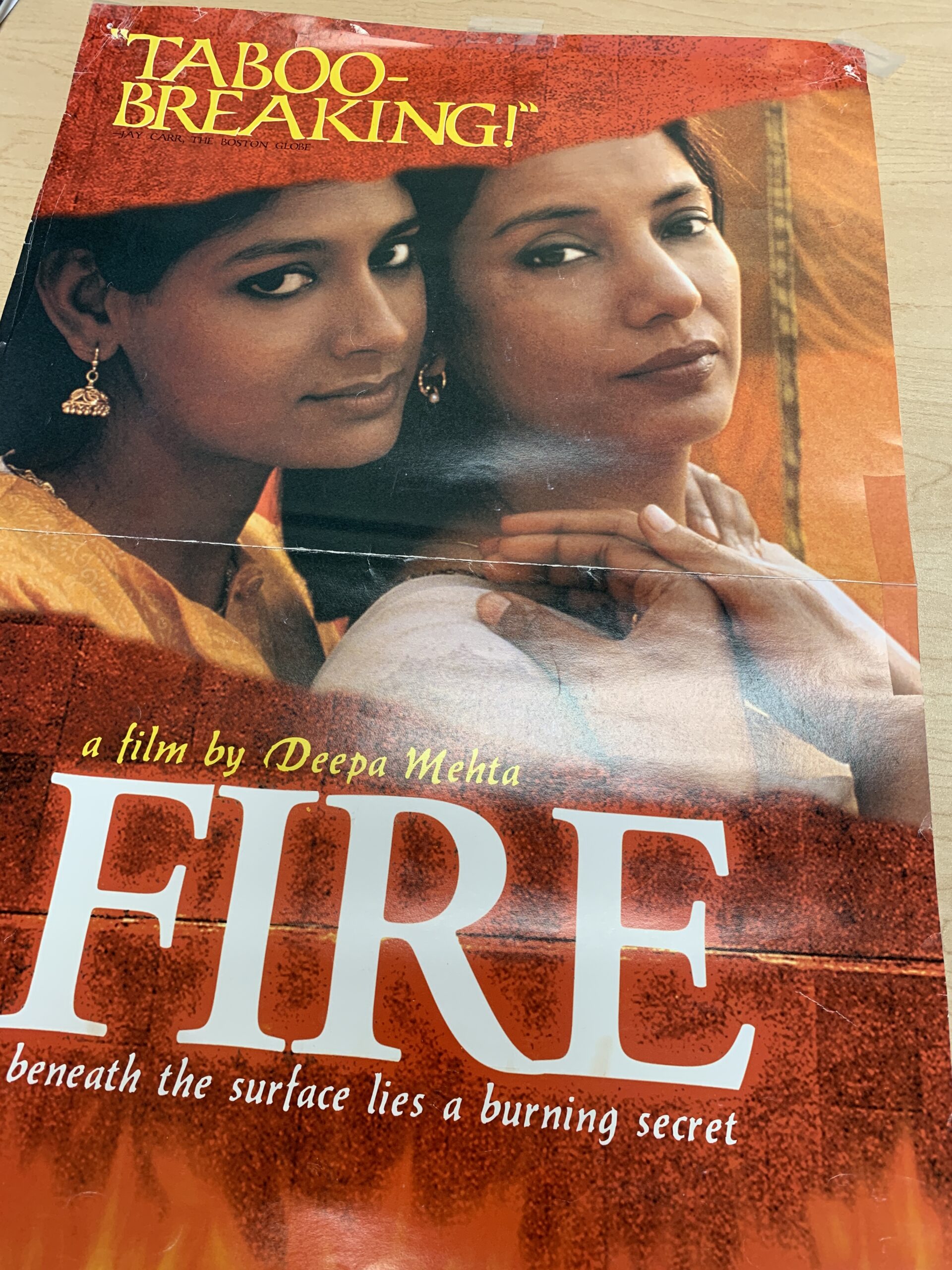
And people change, you know. Like now there’s more representation. There are more queer people. Like there were not, there was no queer South Asian representation. I remember Deepa Mehta’s Fire came out in 1996. And it was— at that time we still had VHS tapes, right? Like we didn’t even have DVDs. And I remember there was the Gay and Lesbian Center in downtown San Jose, had a bookshop attached to it, a queer bookshop. And they were the only ones who had a VHS copy of Fire. And I remember paying $96. which, you know, at the age of 16
00:15:45 SPEAKER_PSK
That’s huge!
00:15:46 SPEAKER_HG
You know, is a lot of money. You know. Like I think it was like, a month’s, felt like a month’s salary, you know, working at Taco Bell, which was my first job. I remember paying $96 for a VHS copy of Fire. And the poor clerk felt so bad. And he, I wanted it so desperately. That in addition to the VHS copy, he gave me, or I think she gave me the poster of the film that she had up. She said, you know, “There’s a poster, I want you to have this in addition.” So I think I still have that poster in my office somewhere, you know. I don’t have the VHS copy, but I have the poster still of the movie, you know. So that’s how desperate. And I remember watching it, you know, with my brother at night. And my brother was like, this is kind like, “This is kind of boring.” And I was like, this is the only queer representation we had, you know. And now there’s a lot more, of course.
00:16:42 SPEAKER_PSK
That is, yeah, I am thinking about Fire now in my own, the first time I came across it, in a very different context. For free, thankfully, and not for $96.
00:16:56 SPEAKER_HG
Well, then I discovered the library! the joys of the local public library [laughs].
00:17:01 SPEAKER_PSK
Yeah. And in my time, you know, you’ve mentioned the 80s and the 90s as like, these big pivotal moments of your childhood. And then I’m assuming you did college up in the Bay, in San Francisco, at that age.
00:17:18 SPEAKER_HG
Yeah.
00:17:19 SPEAKER_PSK
But yeah, that, you know, you’re talking about different shifts in space that you had. And how that opened up different conversations for you, or experiences for you. I’m curious, and just before even moving beyond the time period that you’ve shared so far, which is basically birth until college-ish. I’m curious, who are the people, or like the recurring figures in your life at these times? Like, who are the elements of your communities, so to speak?,
00:18:01 SPEAKER_HG
I mean, in that way, I think you know, I had, in, I really struggled in San Jose, where I had maybe three or four very close friends who understood me. And then the rest of the people in my high school, it varied widely between people who completely disliked me and hated me, to people who kind of generally tolerated me, you know. And even in the four years that I was there in San Jose, the attitudes towards sexuality were beginning to change, you know. And a big part of that was also because I was literally the first person on my campus to come out as gay, you know, and start, like— insist on starting a gay-straight alliance. And there were a few teachers, I remember there was a teacher. I have an English teacher who I was not in, I wasn’t in her class, but I was basically her TA. You know, I was working as her TA during one of the periods. And she gave me— and she was this really cool kind of punk rock chick with, like, tattoos and, like, piercings and bright red hair. You know, like, just, like, just complete, like, alien, you know, from, like, another planet. And I was just always in awe of her. And she gave me a copy of Buddha of Suburbia, the book by Hanif Kureishi. She gave me a copy of Arranged Marriages by Chitra Banerjee Divakaruni, kind of a diasporic novelist. And she gave me a copy of, I think it was Velvet Goldmine. And so she kind of introduced me, she sort of— what she did was, like, with that stuff, you know, she said, “Here is this queer world, you know, that exists. That doesn’t exist here in San Jose, it’s a very boring suburban town. But exists out there, you should go and find it, seek it out,” right? And that was something that had a profound impact on my sense of that, “Okay, I don’t belong here in San Jose. But there’s this other place out there, maybe right over the bridge, like in the Bay, that I can maybe find this,” right? It was the same thing with Armistead Maupin’s Tales of the City, right? Like, so it was, it was those stories that really shaped me, you know. And then of course, I found My Beautiful Laundrette by Hanif Qureshi as well.
So in high school, it was her and maybe a few really close friends, you know, who supported me along the way. But I was so just eager to, like, I mean, I was counting down the days before I could leave my parents’ home and, like, go to San Francisco. It’s a 45-minute drive, but for me, it was like moving to, going to Oz. You know, like, this completely different world. And when I arrived in San Francisco, very quickly, I did find my tribe, right? I did find filmmakers, you know, mostly some queer, some this, you know, ex-hipsters and punk rockers, you know. I found filmmakers, I found teacher professors at San Francisco State. You know, like, I had picked San Francisco State University because I wanted to live in San Francisco. You know, like, I’d gone there. It was a beautiful day. It was like one of those unusually beautiful days in San Francisco where there’s no fog. And I was like, “Oh my god, I want to come and live here.” You could smell the ocean. And of course, that’s not how it really is all the time. And so I picked that school. So that was my goal. I was like, “I’m gonna get there.”
I had no idea that actually that would be the kind of decision that would have such a big impact on my life because it was there that I found teachers, you know, who were teaching classes on transgender issues. You know, I remember I took a, like, one of the classes that I could take for my core curriculum was “Gay Love and Literature.” You know, I took “Queer Art History.” You know, like it wasn’t just like “Art History”, it’s like “Queer Art History”. I studied a class, I took a class on queer of color issues, like people of color. It was called “Coloring Queer.” You know, like people of color and queerness. And like, this is in 2002, you know. Like, I’m not talking about now. I’m talking about like 2002, right? It was actually really the professors in those classes who saw my genuine enthusiasm about these topics, both on a kind of intellectual level and personal level. And then also people who really supported my filmmaking and supported me because they were— I don’t know, maybe they were just, they saw something in me. It couldn’t have been like, you know, I wasn’t, I don’t think of myself as like extremely talented at that time. I wasn’t like a prodigy or something. But they saw my willingness to keep trying and keep learning and being present. I just showed up at places. And those people became my mentors. You know, and many of them were not Indian. Many of them were not queer. Many of them were, most of them were older, you know. Most of them like did some combination of teaching and filmmaking and artistic work. So that became kind of my tribe, you know.
And I didn’t really, like when I was in college, I didn’t really spend a whole lot of time contemplating my relationship to either Sikhism or my Indian background or heritage. And it really only happened when I came to grad school and went back to India in 2007, right? And to kind of go back and try to kind of revisit the India that I had left behind, that in my mind had kind of frozen in time, but it had obviously changed quite a bit. So when I went back in 2007 and I saw my grandfather. By that time my grandmother had passed away, you know. And I sort of saw my childhood home and, you know, and was suddenly back where I was at the age of 13, you know. That’s when I realized that there’s a lot here that I need to excavate and deal with, that things that I’ve sort of just pushed under the surface, that all kind of came out. And then I was like, “Okay, now it’s time to— now it’s time to look at these two things together.” You know, like, so I sort of have this, like, my years of living as a, you know, [laughter] a Sikh Indian, and then my years of living as a gay person of color. And then, like, my years of, like, kind of all those things coming together, you know. And that stuff is like, it’s still, I’m working it out, you know, in my work. It’s still— I’m just finishing a book which is on masculinity and sexuality in Panjab, you know. And so much of it is stories of my own childhood and my relationship to my grandfather, you know. And I feel like I can’t tell the story until I talk about those things.
00:25:59 SPEAKER_PSK
Yes, so many things that I would like to follow up on. Like, just from a personal level of college experiences, similarities and differences around identity negotiation, so to speak. I want to, before hopping into this next stage of your life that you’ve sort of opened up for us. One final thing I wanted to follow up on that you mentioned earlier is you said. It was such a, and you even said it towards the end here. Of, like, a dislocation from understanding yourself as Indian Panjabi Sikh to then being in California and occupying this position of queer man, queer person of color.
One thing that, I mean, you also mentioned that this was California, so there was a vocabulary and a language that you could use. California is also a very heavily, at least now, migrant destination for folks from Panjab and from Sikh backgrounds. So I was wondering if, how did that dislocation process feel? Were you near large diaspora migrant communities? Were you not near them? Was that a dislodging that happened unbeknownst to you. Or was it, were you pretty aware of it happening?
00:27:35 SPEAKER_HG
Yeah, that’s a good question. I think even though we were in, amongst a large diasporic population— there’s a big diasporic population of Panjabi Sikhs in Northern California. At least at that time, they were all in the Bay Area. Now they’ve since moved to like Central Valley. They were there, but to me, you know, I didn’t really relate to them because I had grown up in Chandigarh. Which had, you know— and I hate to sort to sort of say it this way, but it had kind of. And perhaps it’s the virtue of like, of class differences, maybe a virtue of education levels, right? And also that kind of post-colonial Nehruvian kind of influence of what India, this aspirational, what aspirational urban Indians ought to be like. I didn’t grow up— like, I found that people in, at least in the Sikh community in California, were so conservative in their outlook— in their kind of patriarchal outlook of like what Sikh identity is. You know, and what Indian identity is, you know. And I still find that in places that you go to, for instance, in California or Surrey, which is where like I have some relatives, you know. So other, or if you go to Yuba City. I remember my dad wanted us to move to Yuba City and we were just like, “No, this feels like a village [chuckle]. Like we’re not going to move to Yuba City,” you know. Like we all rebelled and said, “No, we don’t want to move into—.” And somewhere that kind of urban exposure and, or at least exposure to urban identity.
It’s like when we were growing up in Chandigarh, even though we’re still in India, there was this kind of transnational connection, this transnational linkages, you know. Like we had access to cable and we, you know, saw what Madonna was up to and we were, saw like what, you know, Michael Jackson was up to. We were exposed to this to this sort of American culture. And somewhere, like, I mean, it wasn’t like. I don’t remember vividly seeing representations of queer masculinity, but at least there were representations of different masculinities, you know, that one could emulate. And Chandigarh is still a little bit like that, right. It still has that kind of cosmopolitanism feel to it.
So for me, when I came to— when I arrived in San Jose or I arrived in California, to me it felt that the community—. Like, I just remember there was one time when I had, I participated, we had a kind of a cultural day celebration event in our high school. And, you know, we decided that we would choreograph an Indian dance and perform it at this cultural day event, right. And we were going to do a Bhangra routine. And I remember, I think it was like, Chaiyya Chaiyya was a song that was very popular at that time. Dil Se had just come out. And we’re like, let’s do a Bhangra routine to Chaiyya Chaiyya, right. And it’ll be fun. And, you know, and we signed up for it. And like, my class, my school had a lot of Panjabi men. None of them signed up for it. I was the only man, Panjabi man who had signed up for this. And it was only girls. And, you know, on one side, they were very thankful that I was participating in this, and I was like the only man who performed in this celebration. But on the other side, I remember, like, they looked at me with this, this sort of look of repulsion that, how can this Panjabi man be so eagerly—. And we were doing Bhangra, it wasn’t like we were doing like, you know, gida performance or something. But they were like, “How is this Panjabi man so eagerly willing to be flamboyant and performative,” you know? “And men are supposed to be not like that.” And I was like, “What the fuck? Like, I’m sorry, like, this is, this is some very conservative way of thinking.”
And you wouldn’t necessarily see that in Chandigarh. Like, I remember when I was growing up in Chandigarh, there was nothing wrong with boys performing like women, and there was nothing wrong with guys singing girls’ song. It’s just suddenly, those gender boundaries, or these kind of, these kind of patriarchal definitions of what a man is supposed to be like became so much more salient and impermeable in, in diaspora in ways that they never were back home, you know. Like, and I’m— this is something that I still find that. That even in Panjab today, yeah, Panjab is a very patriarchal culture, yes, men have privilege, yes, men can be violent, blah, blah, blah, blah, but at the same time, there’s a lot of space for men to express their femininity. There’s a lot of space for men to express their intimacy with each other. Men can actually be, get away with being feminine, or performing, or, you know, flamboyant in ways in which the diaspora, diasporic space was just so unforgiving of that. And I hated it. I was like, “Oh, this is not, this is not my community, you know.” And that was a kind of, that’s when I realized, like, “Oh, these are not my people, I’d rather go hang out with the queer people than the Sikhs in our, in our. Or even the Indians in our, in our high school. And I want nothing to do with them.”
00:33:49 SPEAKER_PSK
Thank you. Thinking, again, about the similarities and differences just across stories and life histories that I’ve come across from what you’re sharing. And it’s leading me to think about something that you. Up until going to grad school, and going back to field work is sort of, like, you know, the place where we left off in talking about your life trajectory a little bit.
As you were moving towards grad school, you’ve talked a little bit now about who the different people or places were that formed your community as you were making your way through life. I’m wondering— it sounds like there are very different senses of what community means. Whether it comes to, like, the queer community that you had access to, and felt a little bit more part of. As opposed to, you know, the migrant, diaspora, Panjabi, Sikh, etc. communities. Was— yeah, I guess I’m just curious, to you at that stage, how has community been understood to you? And I’d be curious as to whether you’ve even thought of an aspect of one of these places as one of your community, because you just said one of them is like, “I’m not of this, this can’t be me,” you know?
00:35:16 SPEAKER_HG
I mean, I feel like, you know, the Panjabi community, and this is not true. And I should preface this by saying that it wasn’t true in India, right? And also, it’s not true now, because now I have a lot of queer Panjabi friends, both in India and here, who I consider part of my community. But at that time, the very limited kind of Panjabi circles that my family engaged with or conversed with—, I never—. To me, a community is, it’s a group of people that, you know, help you grow and feel like you belong in certain ways, right? That sort of lessens the sense of alienation that one would feel. And I never felt that in a Panjabi community. Like, I’ve never felt that. I always felt alien. I felt, in fact, I felt more alien when I was amongst, you know, like when I would go to a wedding or something of like Panjabi Sikh people. You know, because they would look at you and go like, “What’s wrong with you?” Or like, “Why aren’t you doing – not this? Why aren’t you not doing this?” Or they would never. It’s like, it’s like the very basic question of: “You’ve just moved to this country, you’ve left everything behind. Are you okay emotionally? Are you doing okay?” Like those kind of questions never were there. It was always like, aunties talking about like, “Oh, my son is going to go doing this. My son is going to go do this. My son is like studying this. And my son is studying that,” you know, and, “Her son is doing this and blah, blah, blah.” You know, it was like, it was very superficial. It was not the kind of community that I wanted to be a part of. I just didn’t feel like it like fed into my definition of what a community would be. So I never saw myself that as part of that, right? Like I never felt like, and it’s still, it’s still not, it’s still true that, you know, my parents don’t have a big network of friends, unfortunately, in San Jose. They still live there. And they still don’t have a network of friends because most people that they know within the Panjabi diaspora, you know, they’ll – as my mom always says, like, “Well, I don’t choose, I don’t tell them anything about my life because all they’ll do is like talk shit or feel envious, you know.” And I didn’t feel that with the queer people I met in California, right? They might not be able to understand who, who I am culturally and where I’m coming from culturally. But they never, they always wanted me to do well. They always wanted me to be okay. They always wanted, they were always there in a moment of crises when I was going through like an emotional turmoil or something. They also, they always, they always made me feel less alone. And that was really important to me, you know, in a sense of community.
So I kind of just moved, just I, at the age of 18, I moved to San Francisco. I kind of never looked back. Yeah, like, “This is who I am. This is my, this is my, my, my tribe now. You know, and I’m not.” I, even with my. I would go back to San Jose very, very rarely. And even now, when I go back, I just. That, that sense of isolation. Even though like, you know, my school is still there, but like everything else has changed. I still get that sense of panicky, like my, I, my heart starts beating faster because I would always feel the sense of panic, panicky, like, discomfort, you know, whenever I’d pass my high school ,or when I go back to my parents’ home because it was such a, it was such a place of repression and isolation. And, and I— I’m glad that I knew that my ticket out of that was to remove myself. Move away, you know. And it wasn’t something wrong with me, you know. Like that I wasn’t like, you know, mentally not okay. That I never, that like never, that thought never occurred to my, in my mind. It was like, you know, there’s, it’s not like there’s something wrong with me. Even when my parents told me like, you know, “What’s wrong with you? You’ve become this kind of, you’re, you’ve become this gay person that we don’t even recognize. You, you’ve become Americanized. You’ve forsaken your Indian community. You’ve forsaken your Indian self. We’re going to send you back to India.” And I was like, “No. There’s something wrong with. Whatever is going on, it’s your inability to understand who I am. It’s not something wrong with me.” I don’t know. Like, I just never thought that that there was something wrong with me. And that, that sense of belief that like, that conviction within me, that everything was okay— you know, I just needed to find my community, led me into, you know, a place where I was much happier.
00:40:34 SPEAKER_PSK
Out of curiosity, have you thought back to where that surety, that conviction came from for yourself?
00:40:49 SPEAKER_HG
That’s a good question. I haven’t. I haven’t. But I mean, I’m sure part of that comes from this kind of Panjabi ethos of doggedness. You know, like where it’s like, where, where it’s like, where, you know, I might not be the most, you know, intellectually inclined. I may not be the smartest person. I might be a slow learner. But the one thing I am is very dogged. I’m very persistent. You know, like if I, if there’s a path that I want to go down, I will go down that path. You cannot deter me, you know, like you can’t. And I get that from my mother, I think. And I think she’s always had that upbringing.
And there’s something about like, you know, growing up in a, in a Panjabi village or Panjabi society where you kind of have to foreclose yourself emotionally and just believe in yourself and [be] driven by that. Right. And I think part of that is that. There is a kind of this dogged quality of having grown up in Panjabi culture that, that, that has served me well throughout, you know. And it’s, it’s kept me going towards, you know, whatever I felt like my path was. Yeah.
00:42:19 SPEAKER_PSK
Yeah, that’s wonderful to hear. I’m now going to just ask a few clarifying points before we’re moving forward. Because, you know, you’ve shared so many moments of change, so many experiences where you’re coming to realize things that you didn’t maybe know in the moment, but have since now started reconnecting with and rethinking about. I was wondering, if you identify with one of the labels within the existing LGBTQIA+ umbrella, how would you define that label for yourself? And then more broadly, how would you define queerness itself in the way that you use it or understand it in your life?
00:43:09 SPEAKER_HG
Yeah, I mean, I think I, I’m of a generation where the few labels that were available to us were available to us were gay or straight. You know, and even bisexual was something that was not necessarily available, that people took seriously. You know, I remember a lot of straight people or queer people used to ridicule bisexuals, you know. And, and so for me, the umbrella came after I had already formed a very clear sense of my gay identity, right? And I still sort of refer to myself as gay. However, I also recognize that there’s a kind of stereotype, there’s a kind of stereotype of gender that’s associated with being gay as very masculine. Or more masculine, you know. I think popular images of gay men, at least in culture, can tend to be— now we’re seeing more kind of divergence from that— they tend to be more kind of stereotypically masculine. And I never was that stereotypically masculine. I still think of myself as a little bit less normatively masculine, you know. And I’ve, I’ve always been, I shouldn’t say I always, but I’ve become very comfortable with that.
So, I’m sexually gay, I’d say. But in terms of my gender presentation, it’s more queer, right? I still use he, him pronouns. Again, I just feel like, ugh, I lived my, like, 40 years of my life with this identity. And now I’m not. I’m too old and too tired [mutual chuckle] to go through the thinking of like, wanting to change it, you know? It’s like, “This is who I am, and this is the way it’s gonna be.”
00:45:15 SPEAKER_PSK
It is a valuable position to take.
00:45:18 SPEAKER_HG
You know, it’s like, you just, I mean, like, that kind of identity work requires a lot of emotional labor. I just like, I’m like, I am way too tired all the time nowadays. [chuckle]
00:45:29 SPEAKER_PSK
Have you heard, more recently, this is a complete aside, but have you heard of Gen Z’s Bimbo Feminism?
00:45:38 SPEAKER_HG
No, I haven’t. No, I should.
00:45:40 SPEAKER_PSK
You, you, you may want to look into it, just for curiosity sakes.
00:45:47 SPEAKER_00
Okay. Bimbo Feminism. Okay, I will check it out. I mean, and, and, you know, and, and sometimes I am actually a little envious. Because I teach classes now, which is mostly Gen Z students, you know, and they’re all 21, 20 years old, and all the young men are fluid in terms of their gender presentation. Many of them are just queer, and they don’t have, like, this particular, like, nobody identifies as gay or lesbian anymore. Like, they all identify as queer and all identify as bisexual or pansexual or, you know, or, gender fluid. And honestly, like, if, if, when I was coming of age, if somebody said that, you know, like, nobody took them seriously. Nobody took anyone who claimed that identity seriously. And I wish I had those, those identities available to me at that time, you know. And, because I would have, it would have been great to have, to be able to identify as queer. It would have been great to—.
And it’s, you know, it’s like, they’re not afraid of, you know. I can’t, I think my generation is the last generation of gay men who came of age under the specter of homophobic violence, right? I think your generation is coming. I mean, they know that there’s such thing as homophobia. There’s know that there’s such thing as anti-gay sentiments. But they don’t— they, they don’t, they don’t have to think about it almost every moment of their life the way we did when my generation of gay men were coming up. Even in a city like San Francisco, to go, go to a straight bar and to kind of think twice before, you know, talking to a guy that like, you know, he might be homophobic and like beat me up or something like. Like that, that was, that, I remember very vividly feeling that, that sense of like fear.
So, so I’m envious of the younger generation. I’m very happy for them. But I’m also envious of the younger generation, that they have all that available to them, you know? And for us, it was very like. They have a sense of ambiguity available to them in ways that we were never allowed that, you know. For us, it was very clear. Like, if you’re gay, you go to the gay bar. If you’re straight, you go to the straight bar, you know. And you go over there, and you go over there, and these are the, the, the boundaries and should not cross them.
00:48:30 SPEAKER_PSK
Yes. Yeah. That is, as a lot of folks today talk a lot about the importance of categories for identities, a lot of what you’re saying adds another layer on to it. Because these categories are historical in many ways, and their meaning changes within different defined periods. Yeah. And now I’m thinking about, thinking of, I think you said 25-year-old you having accumulated these experiences. Growing up in Chandigarh, going to California, going to college. Beginning grad school and now coming back to do fieldwork in Punjab, or in Chandigarh.
I’m curious, how did that process of just, of choosing your topic of study happen for you, that like, you were like, “I’m going to go back to Panjab”? Were you expecting to have these sort of like, renegotiating experiences? Or were they not even on your radar?
00:49:32 SPEAKER_HG
I knew that, I knew that if there was a time when I could go back and engage in this kind of excavation of the past. Right, like, it’s literally this sort of kind of archaeological excavation of like, my own past, and like, to make sense of it. If there was a time that I could do that, that would be my fieldwork, or like the time in grad school. Because once I started working, or once I started, you know, I knew that if I started getting, like my brother, for instance, you know. He works, he’s in the military, and he works full time. He doesn’t have a year off or sabbatical or something. So once I started my professional career, it’d be very difficult to go back, you know, and sort of participate in that kind of exercise.
And there’s something in me that kept like, pulling me back and saying, like, “Hey, I want to go back. I want to go back.” And, and maybe it was because also, my grandfather was still there. And I was very, I’ve always been very close to my grandfather. I’ve had always had a very kind of tortured relationship with him for a variety of reasons. But he was the kind of the patriarch of our family. And he made everybody’s lives miserable. But at the same time, he also loved me more than anybody else. And he sort of, you know, he could, on one level, he could be very, very aggressive and mean and a kind of tyrannical, you know, patriarch. And on a level, he could be very benevolent and sweet and nice and loving and, you know, affectionate towards us, his grandkid— grandsons, mostly.
So I, for me, it was a kind of a good excuse of like, “Oh, I can I can go back and I can spend time with my grandfather. I can try to understand him. I can understand myself.” And that’s kind of how that started— wanting to look up. And initially, I was thinking, maybe I’ll do something on Panjabi media, or Panjabi cinema, or Panjabi culture, you know. And then I kept dancing around this idea of masculinity. And I was like, finally realized, like, “Okay, I cannot not engage with this question of masculinity,” right? Like, “I cannot not explore it.” And so once I started, you know, exploring that, it just, new questions kept emerging. New inquiries kept emerging. I met other people who had life experiences that were very different than mine, you know. And that made me rethink all the things that I used to think. And so I kept going back with those new set of questions, and finding more things to write about, to make films about, to research, you know.
I think I only now, after having spent 10 years going back and forth between Panjab and in the U.S., you know, that I’m finally at a point where I can write about it, on kind of in the form of a book, you know. And kind of deal with it in this sort of big way. Where it feels like I have a grasp on the whole picture, you know, in terms of how masculinity and sexuality gets constructed in Panjabi culture and society, and in Sikhism as well. And, you know, the way I feel about Sikhism. And that’s the other thing is that I think I’ve had this sort of back and forth with Sikh studies as well. Because I am very critical of Sikh studies, and of religion and of religious studies, because I’m an anthropologist. That’s what we’re taught to do, is to be critical, you know, like, why not? Why wouldn’t you be? And most people who are in Sikh studies are not open to that kind of critical inquiry, you know. And certainly people, if the Sikhs are not open, you know, people in positions of power in Sikhism are not open to that kind of critical inquiry.
So I’ve met, I’ve been, I have met, I’ve met a lot of resistance, you know, against what I have to say. And what I—. And to tell you the truth, part of the reason why I haven’t necessarily been able to say what I want to say and get away with it is because of my position as an upper, a dominant caste Sikh man, you know. Which speaks to the kind of casteism within our community. And so I’ve always wanted to do— engage in kind of more critical Sikh studies, but I have a hard time sometimes working very closely with people who are in Sikh studies because they’re not receptive. They’re not open to this kind of work. So anthropology provides a nice space to be able to do that, you know. And I think there are other people in my circle who are interested in engaging in, and I’m sure I can include you in this, who’s interested in engaging in more kind of critical, doing more critical Sikh studies, which I think there’s a space to be able to do, you know.
So, but I just, it was just something that I had to work out of my, get out of my system. And I knew that like, eventually I would have to sit down and write a book about it. And once I’m done with this book, I think I’m going to move on to like some other topic somewhere else, because I feel like I’ve sort of, you know. It’s like I have scraped the bottom of the barrel, at least in the kind of questions that I wanted to ask. And I really want to find a new direction to take my research into. So we’ll see. I’m trying to finish this book now. Once the book is done, we’ll see where that goes.
00:55:45 SPEAKER_PSK
Well, I personally would love— can’t wait to hear, read the book. I’m wondering, you know, you said that you’ve been, the past decade or so of your life has been going back and forth to Panjab and doing this research. I mean, I feel like it would be so hard for that not to be personal. You know, everything that you’re sharing so much in the sense of like, it’s transformative. It’s raising questions about your life and relationships over the course of your life. How have you been taking care of yourself as you’ve been doing this work over the past decade or so? In other words, if you— go ahead.
00:56:30 SPEAKER_HG
That’s a good question. I think I, as I said, if it wasn’t for the kind of joy that I also derive from this work, I wouldn’t be doing it. If it was just about like, violence and patriarchy and the oppressiveness of patriarchy, it would be very dreary and very sad and very boring very quickly, you know. But I actually have a good circle of, again, queer Panjabi people now, you know, with whom I like to spend a lot of time and be present in that moment. And for me, that’s enough to kind of recharge, you know.
It’s actually— I find the writing process to be more torturous and laborious than actually going back and spending time in the fields, because it’s such a joy to just spend time with people, you know, who genuinely want to share their lives with you and like want to shoot the shit and just want to hang out, you know. And sometimes, and to me, that’s much, much more rewarding, you know. Or making a film is much more rewarding and I derive a lot of joy from that.
So I think for me, self-care is really about taking the time to be present in whatever moment. And also just, you know, I don’t take myself that seriously, [chuckles] you know. Like, I don’t, I’m not— I’m at a point in my career, fortunately, knock on wood, where, you know, I don’t need to finish a book to be able to get my next promotion. Or I don’t need, you know. Like, I’ve done the rat wheel of academic publications and stuff like that. And I worked really hard for the next, past 10 years. And now I can do things that really, truly interest me. And so to work. To have a, to redefine my relationship with my writing and my work, which is not about producing, per se, but more about being in the moment and just writing. And just deriving the joy from that is, to me, that’s much more rewarding than anything else, you know.
And I think that’s actually part of my challenge with this book right now is because I’m actually writing, I’m enjoying the process of writing it. I can’t believe I’m saying this. I’m enjoying the process of writing it. I’m dreading the process of trying to get it published because that’s impossible, right? And before, if you’d asked me, I would have spent my entire time thinking about, “Oh, where is this going to be published? Who’s going to be the publisher? Where is it going to be?” And not so much on, like, “What the book is going to be,” right? Because you’re told that, like, the value of your work is really defined by where, what press is it going to be published in? And how is it going to be received in academia? And I’m, like, you know, fortunately, because I sort of went directly from my PhD to my teaching career, you know, I’ll be full professor by the end of this year. I don’t need to do that anymore. And there’s that anymore. And there’s something very liberating to be able to say, like, “Oh, I don’t have to adhere to this arbitrary definition of what the institution renders is my value is,” right? And I recognize the incredible privilege in being able to say that.
That, that really changes your relationship with your work. It makes it much more fun to engage in and less of a kind of a chore, you know? So, I don’t, I mean, you know, self-care is not answering emails, saying no to obligations, to be able to spend the day writing my book. Like, that sounds amazing. I know it sounds, like, that’s such a treat these days, you know? Otherwise, I have 30 emails from my department asking me this, this, this, this, you know, like, “This student needs help, this student needs help. I got to grade these papers. And, like, you got to do this, you got to be here, you know. Like, oh, you got to organize this panel. You owe this to this journal,” you know? So, yeah. So, that, to me, that’s much more rewarding.
01:01:25 SPEAKER_PSK
That makes a lot of sense. So, this is the last set, last portion of the interview, last set of questions that I like to end on. And I think, given what you were saying along the lines of doing work that’s meaningful to you or work that you find joy in, I think, feel free to continue on that in this next set of conversations or completely go elsewhere. I’d love to know what you think desire is. Do you, how is it different from intimacy or even dreaming? And I have context, more, if you’d like it.
01:02:18 SPEAKER_HG
I think, that’s an interesting question. I think, for me, when I think about desire, it’s impulsive, right. It’s in the moment, it’s indulgent, it’s, you know, it feels urgent, right? It’s something that you cannot, in that moment, live without, or you must have. You must give into. Whereas intimacy is something that one can only cultivate over time. That requires a kind of getting to know each other. That requires a kind of pursuit of curiosity that allows you to cultivate a sense of intimacy. Whether it’s with a place or whether it’s with people in your life, right? Like, you have to remain, you have to kind of keep coming back. And you have to keep, I mean, even with, you know, if I say, like, I have this intimate relationship with a place like Chandigarh or even Panjab, you know, it’s like, you have to keep coming back, even if you don’t want to. And you have to keep bringing your sense of curiosity to it. And it’s through that sort of curious, gentle, kind of persistent inquiry that you begin to kind of understand a place. And once you understand something, you understand someone, you can cultivate an intimate relationship with them.
It’s really easy to desire something that you don’t know, you know, only superficially, you know. Like I desire, you know, going on a vacation to, I don’t know, like Hawaii, right? Like, it’s like, it’s like, I have these sort of impulsive desires. Like I desire another body. I desire, you know, this, to eat this thing. Or I desire. Whereas intimacy is something that’s sort of really cultivated over time, to get to know people.
And so, you know, like, I think, as you get older, one of the things you realize is that you can, you still have those kind of impulsive desires, but you don’t— you’re, you don’t have to give into it all the time. You know, I feel like when you’re, when I was in my 20s, I was much more impulsive and wanting to give into those desires, because often kind of desire is a way to sort of escape your immediate reality, right? Like, whatever it might be. And now I can sort of say, like, “Okay, I recognize that there’s this one thing that’s really calling my attention, but I can recognize that and still be in this moment that I’m here in, in being engaged in my intimate relationship with my work,” you know, or something. So I’d say that’s the kind of difference between intimacy and desire. And the third one was what we, what was the third category?
01:05:29 SPEAKER_PSK
Dreaming.
01:05:31 SPEAKER_HG
Dream. I think it’s more about aspirations, right? Like dreaming is about kind of aspiring to something, which is always changing and, and evolving, right? I’ve always had a. I’ve always been driven by certain aspirations or dreams of who I want to be. And over time, those, those dreams or those aspirations evolve, even if I have achieved them. You know, I sort of see it like, “Oh, now by the time you kind of get there.” But you know, like you sort of dream of having, it’s like you dream of having a tenure track job. And you get a tenure track job and you get there and you’re like, “Well, now I dream.” Like, by the time I got there, you can’t just like, enjoy that dream. You know, or before you even enjoy that dream, you suddenly have a dream of like, “Okay, now I want to be a full professor.” You know, like, and then you get there and you’re like, “Okay, this is not what it was cracked out to be.” Or at least that’s, “This is not what I was promised or I thought.” You know, sort of, you think about the dream is like, “Oh, once I get there, I’ll be really happy all the time. And I, I’ll just be skipping,” you know, through daisies or something. And, and you get there and you realize, “Oh, this is not what I was cracked up to be, or at least this was not, this is not, this is the, the kind of, this does not meet the kind of definition of what I was sold to me.”
And, and so I think it’s really important to dream. I think it’s really important to have these aspirations. But I also think it’s really important to have those continuously evolve. You know, life, because it will dictate, at least for me, has dictated my own evolution in my life, right? And, and, and to kind of hang on to just this one dream, you know, maybe not as useful.
01:07:34 SPEAKER_PSK
And where would you say that these days, where does creating the space for intimacy or fulfillment of some desires fall on your list of priorities?
01:07:44 SPEAKER_HG
Creating a state, a space for intimacy? What is it?
01:07:48 SPEAKER_PSK
Yeah. Creating spaces for intimacy or fulfillment of your desires as you’ve defined them. Where does that fall on your list of priorities these days?
01:07:57 SPEAKER_HG
I think they vacillate, right? Like, I mean, these days, I, I’m always, even in my 40s, I’m sort of driven by sort of impulsive desires, you know. But I do find that I’ve always, I’ve always prioritized wanting to create intimacy. You know, whether it’s with my friends, with my partner, with my, you know, community, whether it’s with my work, I’ve always, I’ve always looked for that intimacy. I privilege it more now, I think, than I did before.
I also don’t like, you know, I don’t, I don’t spend a ton of time sort of thinking about the past in ways that I guess one ought to or should, you know. I have a kind of a— a very forgetful memory. And I think my brain, the only way it can work is like, it’s by erasing any. Like, you know, it’s like, I have like a limited, like, I think of my mind as like a limited hard drive, and it constantly needs to erase everything that was like, that’s not essential for it to capture, you know, what, what’s happening now, you know. So I don’t, I don’t, I don’t. I’m not one of those people who sit there and kind of ruminate about these sort of past experiences, even though looking back at some of them, now I realize how formative they were in my, in my, in who I am today. But I’d much rather, I’d much rather prefer kind of being in that, in, in the, in the present, in that moment, as opposed to, you know, thinking about the past. Or even for that, for that matter, the future, you know. And I, in my, in my 40s, I just turned 41, you know, in my 40s, I feel much more at ease and at peace with who I am.
01:10:14 SPEAKER_PSK
I’m glad to hear it. [chuckles]
01:10:15 SPEAKER_HG
You’ll get there! [chuckles]
01:10:19 SPEAKER_PSK
One day. What would you, I mean, to take a note from your own book, I’m trying to enjoy where I am while I’m here.
01:10:27 SPEAKER_HG
Yeah.
01:10:28 SPEAKER_PSK
What would you say your hopes and aspirations, or as you know, as we know you know them in Panjabi, umeedaan [hopes] are for yourself, and for different communities that you identify with? A two-parter question.
01:10:43 SPEAKER_HG
Yeah. It’s a, that’s a, it’s a good question. And it was funny because I was showing. I teach a class on visual anthropology, which is a methods class. And yesterday I was showing a film, and I was pointing out to my students how like the, the director kept asking about people’s hopes and aspirations, and how great of a question that is to ask when you run out of questions. You know, like, you ask that question because that’s how you get to know people. Like, what are they, what are their, their hopes? What are their aspirations in life? What is the one thing…?
They had actually just watched Paris is Burning, and then they were watching the documentary in class. And if you watch Paris is Burning, not to go off topic, it’s, so much of it is about these kind of queer people who’ve been asked that question of like, what are their, their, “What is the thing that they desire the most? What are their hopes? What are their aspirations in life?” You know, and knowing very well that like how difficult it is for their aspirations to come true because of who they are, you know.
And so that’s a good question to be asked myself because I ask that question all the time from people in my life. And I think, I’m at this point— stage in my life where my hopes and aspirations is to be able to continue sort of building and cultivating and being present for the communities that I have formed in different places and along the way. You know, whether they’re in BC, kind of my circle of friends, or in India, the kind of my interlocutors, you know, my intellectual community that I’m part of. Other scholars who like my work and give me honest feedback. My co-workers at work.
So, if my— now my hope and aspiration is to kind of think about growing old. Being surrounded in those communities in a way in which it doesn’t feel as lonely as it does for, let’s say, my parents, you know, who live kind of alone, to whom aging looks very different and only kind of one idea of aging is available to them, you know. So, what is a, what is a, what is a kind of a communal aging looks like for a bunch of queer people? Or even for that matter, the straight people in my life, like my brother who doesn’t have kids, right? And so, and I think of like his family as kind of a queer family, even though he’s married to a woman, you know, but they don’t, they decided not to have kids.
And so, so that’s kind of my hopes and aspirations. And it’s nice to kind of finally be at a point where those hopes and aspirations are not so clearly defined. Because until five years ago, I was like, “I need to be a full professor. I need to make X amount of money. I need to have a house. I need to write my book. I need to make my films.” You know, like these things are very concretely defined. And I’ve actually accomplished, you know, somehow through persistence, again, all those things. [chuckles] All those things to one level or another. You know, salary is still, I’m still like. Sometimes. Like I paid off my student loans. That was a big accomplishment. [chuckles]
01:14:24 SPEAKER_PSK
Yes!
01:14:25 SPEAKER_HG
So, so financially, you know, as an academic, you will never feel that, that comfortable, but I feel pretty comfortable financially, you know. So, so I don’t have those kind of similar material aspirations. So now I’m trying to think like what my hopes and aspirations are going to be if they’re not about material things, but are about creating a sense of community, you know. And, and not making the same, repeating the same mistakes that my family, my parents made. And this is a conversation that I have with my siblings all the time. It’s like, let’s look very critically at the mistakes that my parents have made or their parents have made, what they did wrong. And let’s not repeat that in our family. Right. And that’s a kind of a critical self-reflection that’s required that many Panjabi families and South Asian families certainly do not engage in, you know. And just sort of say like, okay, they’ve decided to live their lives like this, but we’re going to live our lives like this.
01:15:29 SPEAKER_PSK
And just very quickly, just to follow up on something. In part, you said that your hopes and aspirations for yourself in relation to your communities, but do you have any umeedaan for the communities themselves? Like, you know, the folks that you’ve mentioned, do you have hopes for where they’ll be in their life? Because, you know, you, you’ve said, you’re currently defining them very open-endedly for yourself.
01:15:57 SPEAKER_HG
Uh-huh.
01:15:59 SPEAKER_PSK
Have you given yourself the chance to think about like, I want my X community to be here. Or I hope this for them, in the most specific or the most broadest terms?
01:16:16 SPEAKER_HG
I think, you know, there’s a kind of very broad way of. Of course, those, there’s the kind of broad the kind of broad political hopes and aspirations for communities. You know, like we’re, we’re, we’re we’re, suddenly thrust into this, this kind of hellhole of like anti-LGBTQ rhetoric and laws that are scary. But, you know, I also, there’s, there’s something that you get with age that you don’t understand as a young person, which is the sense of kind of time, and retrospective kind of swirl of history. And I— it doesn’t, you know, like when you hear kind of anti-queer rhetoric now, it doesn’t feel as catastrophic or urgent as it did, you know, in 2004. I remember when Bush was running for his re-election on the platform of making gay marriage illegal, or like to, to actually de— or to, to revise the definition of marriage in the constitution to be a one man and a woman. Right. And I remember like that feeling so so disenchanted by this country and its politics and just going like, “Fuck this man. This place, burn to hell, I’m going to move to Canada.” [chuckles]
And, and I remember when Bush was elected, or I’m sorry, Donald Trump was elected, a lot of my friends said that. And I was like, like, I know that it feels really dark right now, but things will kind of brighten up again. Like we will go through this and we will come out, we will survive, we will rebuild, you know. So, so I do. My hope is that even when you have these catastrophic events that are happening that cause this grievous pain, emotional pain and injury to us as a community. Whether, you know, queer community or South Asian community, community, or even like Sikh community. That we have the strength and the will to rebuild and support each other and, you know, support ourselves. So that’s my kind of hope. Because you cannot, you cannot expect from these catastrophes, to not happen, right? Like you cannot expect, you always have some bigot who’s going to come out and try to capture the, a popular sentiment, you know. And so, you know, you will, will always have to fight this fight. But I just hope that like people are not disenchanted by it or give up because it’s a long, prolonged struggle for equality, right? As long as equality is happening, which I think it is mostly.
The one thing I do get pessimistic about is the state of the climate and the climate crisis in this country and the world, you know. And how it’s affecting people’s lives. And how precarious it makes everything. You know, you sort of realize how we exist on this edge of precarity, even though we think of ourselves as being very evolved and like, it’s just a matter of. But I don’t know. Like if tomorrow, the entire earth is wiped away, [chuckles] or there’s a giant flood, you know, take us all out. I think that the nature will still be there. The earth will still be there. It’ll just be us who go extinct, you know?
So, you know, absent of like a major, like atomic bomb or something going off, and even then. Like, you know, nature has a way of kind of coming back and it’s us who have to figure out how to live with the changes, you know? So, I don’t know. I mean, I do sometimes worry about that. I think that’s a kind of urgent concern is environment and the nature and what kind of climate that we live in, but I still am mostly pessimis– optimistic. I don’t, I’m not a pessimist. I’m an optimistic person and I think, you know, we have survived calamities before. We will survive them again in whatever shape or form they happen, you know? We will survive the tyranny of Donald Trump 2.0 if that happens. We will survive Modi, you know? Like, nothing lasts forever.
01:21:10 SPEAKER_PSK
Last question. What do you hope comes out of sharing your life history with us in this project?
01:21:22 SPEAKER_HG
Oh, God. That’s a difficult question to answer because it’s sort of, it’s built on the premise that my life history has something to offer. [chuckles] And I don’t want to be that kind of presumptuous about my own life and think of myself in those kind of grandiose terms. But, you know, I think if there is a queer person or a person of color who have struggled with different aspects of their identity and has gone through that, you know, and if. You know— it’s. I’ll say more than anything else, the reason why I even started making films is films is because when I was coming of age in the late 1990s and early aughts, I just felt so alone, and I wanted more than anything else, some, you know, text, some writing, some film, some story that made me feel less alone. And if my work, you know, cumulatively you know, my work— my books, my writing, my films— allow people to overcome or deal with that sense of loneliness or isolation, then I feel like that’s a very valuable thing.
But I also realize that, like, for me, a lot of this is about also working out who I am and it’s kind of fulfilling this need within me as well, not just. Like, this is not an altruistic endeavor to sort of say, “Oh, I’m going to write a book about my life [chuckles] or talk about my life because, you know, people really need to know who I am.” It’s more kind of, it allows me to work out who I am and it’s useful for me as well.
01:23:29 SPEAKER_PSK
Lovely. Thank you. Thank you for sharing the part of your, go ahead.
01:23:37 SPEAKER_HG
I hope that was even useful. It’s so rambled.
01:23:41 SPEAKER_PSK
It, it really is. Because, I mean, I mean, we can talk about this more afterwards, but I was. I think we underestimate, even especially as researchers, the power of a story.
01:23:54 SPEAKER_HG
Yeah.
01:23:55 SPEAKER_PSK
And we underestimate the reach of the digital, which is a big point, a big part of what’s leading this project’s effort. So, yeah, I feel like just, you know, the things that you’ve said on their own, as I think of them as very humble desires or outcomes. But they will— I can almost say that they will no doubt, at least the first one, I hope the second one too, but first one for sure, it’ll get to someone.
But yeah, thank you for sharing this, your story, your life with us. Just wanted to open up this last end of the part. If there’s anything else that you wanted to share before we ended?
01:24:40 SPEAKER_HG
No, no. I mean, that’s about, that’s about it. I feel like I’ve talked or rambled for so long.
01:24:49 SPEAKER_PSK
No.
01:24:50 SPEAKER_HG
So, you know, if I think of something, I will let you know. But for now, I’ve said quite a bit. Yeah. I will go ahead and turn this off.